I was at a local game designer meetup recently talking about something I was struggling with in Far Lands. On every character sheet was a section of gear they carried. I’d been asked for that specifically by multiple playtesters, but just couldn’t seem to make it feel right. One of the designers, I wish I could remember who, gave me the best pieces of advice I’ve gotten for my game design recently:
“Identify the fantasy of the game. What player behaviors would support that fantasy? Does that part of your game contribute to the fantasy or create those behaviors? If not, cut it.”
And I realized that of course, no. This isn’t a game where inventory matters. So I cut it.
But why doesn’t it matter?
When would it matter?
Tracking exactly who’s carrying what might matter in a very different game. In His Majesty the Worm, what you’re carrying in your hands, on your belt, and in your pack really matters. The fantasy is all about moving carefully through a dark and dangerous dungeon, so who is carrying the backup torches might be a matter of life or death.
And yet in any other system, I’ve rarely played or run a game where exact amounts of rations, torches, or arrows was tracked at all. Why does it matter so much in one game and not in another? Because in his Majesty the Worm, the exact contents of your inventory matter.
The game delivers a different fantasy, where it might be the difference between life and death if an item is on your belt or in your backpack. And the other mechanics connect to it directly: each slot in your inventory is numbered so events can target random inventory slots.
Why doesn’t it matter?
On my blog I’ve been talking about the reasons players might not engage with mechanics. One I see time and time again is that the mechanic just doesn’t seem worth it. It doesn’t have any mechanical effect, it isn’t connected to the rest of the system, it just doesn’t matter.
It turns out, there’s a convenient theoretical framework that shows us exactly why. MDA is a framework for game design and analysis in which, games are broken down into three layers: Mechanics (what do the rules instruct you to do), Dynamics (what behaviors do the mechanics create), and Aesthetics (what feelings or experiences does the game create). Mechanics that aren’t worth it are a disconnect between those layers.
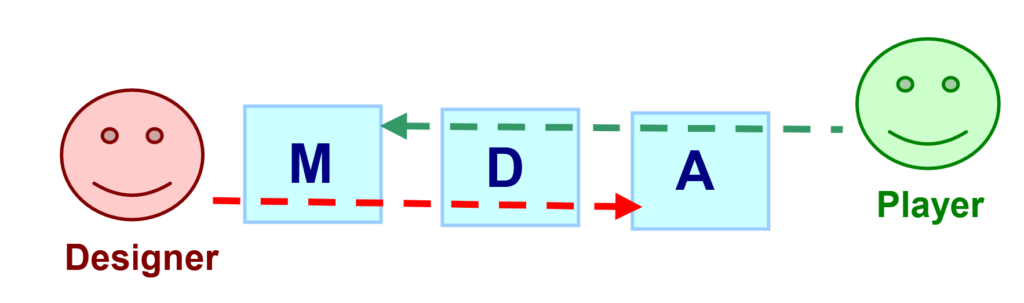
Take for example tracking ammunition in D&D 5e. It’s a relatively simple thing to execute, not any different from tracking spell slots really. But even if it’s actually applied, it barely changes the dynamics, and it doesn’t contribute to the fantasy of the game.
Let’s identify the fantasy of the game (the aesthetic, in MDA terminology). This will vary from table to table, but the most common way that people play D&D 5e is as a cinematic, heroic game. It wouldn’t do for an epic hero to run out of arrows, unless it was at a dramatically appropriate moment! Most games… Just aren’t interested in that happening. It doesn’t contribute to the aesthetic! And so the mechanic is ignored.
But how does it connect to the dynamics? That’s a more complicated matter. Perhaps it might make a player choose to conserve their resources and use melee options more than they otherwise might. But in practice, it most likely just means a few seconds of extra logistics buying arrows when the party returns to town. It does have a mechanical effect- when you run out of arrows, you can’t use your bow anymore. But what if it didn’t?
Intangible mechanics
Some rules don’t seem to actually have “mechanical” effects at all. An episode of Dice Exploder podcast I listened to recently described these as “intangible” mechanics. In the episode, Sam Dunnewold and Alex Roberts discuss “pity points” from Kagematsu. The game never tells you to do anything with them, but they affect the game in a myriad of subtle ways. Because pity points and their counterpart, love points, are awarded secretly, their existence conceals whether the player actually received a love point or not.
But perhaps more importantly, the fact that they are described as “pity” points dramatically changes the feeling of playing the game (the aesthetic), and, consequentially, how the players engage with it (the dynamics). Give the episode a listen to hear more about it!
These mechanics feel “intangible” because they don’t connect to the other mechanics. Instead, they connect to a higher level of the MDA framework: directly to the dynamics or aesthetics.
Another excellent example of an “intangible” mechanic discussed in the Dice Exploder episode is “contempt tokens” from The Quiet Year, by Avery Alder. In The Quiet Year, a player can take a contempt token whenever another player starts a project or resolves something in a way that they disagree with. Players may return tokens when someone acts selflessly or diffuses tension in the community.
The tokens themselves have no effect, but at some tables, their influence on the game can be undeniable. It’s a marker of conflict in the community, a reminder that there is tension to be diffused. The act of taking a token, the presence of the token, and the act of returning the token all change the emotional charge at the table and in the world of the game (the MDA aesthetic). This change in how the game feels in turn changes how people play (the MDA dynamics).
Using intangible mechanics
This perspective has changed how I think of rules. In a previous blog post, I talked about how incentives can affect the game-feel and play patterns in ttrpgs. While these incentives can be tied to other mechanics, they don’t actually have to be in order to have the same effect.
This is what inspired how I use conditions in Far Lands in my original design, each condition had a unique effect. In playtesting, players couldn’t remember what they were, so I simplified it and made every condition the same. But if they were all the same, I started to wonder why it mattered that they were different at all.
Looking deeper, I realized that the names of the conditions being different was what made their effects different. Even if they were mechanically the same. In fact, they didn’t need a “mechanical” effect at all!
Merely telling the players “you are exhausted” or “you might become injured” had exactly the desired effect. It changed the ways people evaluated the danger level of challenges, the way they described their approach, the way they moved through the world and made camp.
Even though conditions don’t do anything, they still matter. They give impact to the complications explorers encounter. They make challenges feel risky because of the chance of complications. The stakes feel real, and that changes how people play.
No matter how a challenge resolves, there’s no change to the gameplay. But the conditions change to how the gameplay feels and how the players behave.
What can go wrong?
Intangible mechanics like this can be subtly powerful. They can have a dramatic effect on gameplay and game-feel without a significant amount of cognitive load (something I discussed in a previous blog post). But they are equally risky. Players might not see the benefit of the mechanic if it isn’t obvious what it does. It might seem like it doesn’t matter, and be ignored.
I can see a group asking: if conditions don’t do anything, why are we bothering to mark them? And if we aren’t marking conditions, why are we checking to see if we get a complication? If we aren’t checking for complications, why are we marking stress? Why do we have to overcome a challenge?
By pulling this thread, the entire game unravels. When we remove one intangible mechanic, the other parts of the game that lean on it become intangible themselves.
It’s ok if a rule is strictly narrative, or doesn’t seem to serve a purpose at first glance… if it reinforces the themes of the game or the behavior that makes the game work!
Leave a Reply