Blog

  • Far Lands update: Overcoming perfectionism

    Late last year, I set myself the goal of finishing the first draft layout for Far Lands by the end of 2026. I have now realized that I was very,very over-cautious with my timeline!

    So far, I’ve completed what I expected to be five months of work in one month. I’m almost halfway done getting all the text from the manuscript laid out and looking good on the page. And I’ve learned so much from the process! There’s a lot I could talk about when it comes to layout, writing, and game design that I’ve discovered from working in this form factor. But the biggest difference in my day-to-day life has come from what I’ve learned about overcoming perfectionism.

    I won’t pretend this is will be applicable to everyone, or even anyone other than me! This is as much to keep myself accountable and to record what I’m learning for myself as it is for anything else. But if any of this resonates with anyone, I’ll consider that a wild success.

    Perfectionism is the real enemy

    Starting out, I had a lot of fear that I wasn’t going to be able to live up to my own expectations- that I wouldn’t be able to get it looking how I imagined in my head, that I would burn myself out trying to get it done and lose my excitement for the project, that it would prove impossible to translate onto the form factor I wanted. And this fear was stopping me from even starting, making it feel insurmountable to even think about getting started.

    This is, it turns out, textbook perfectionism.

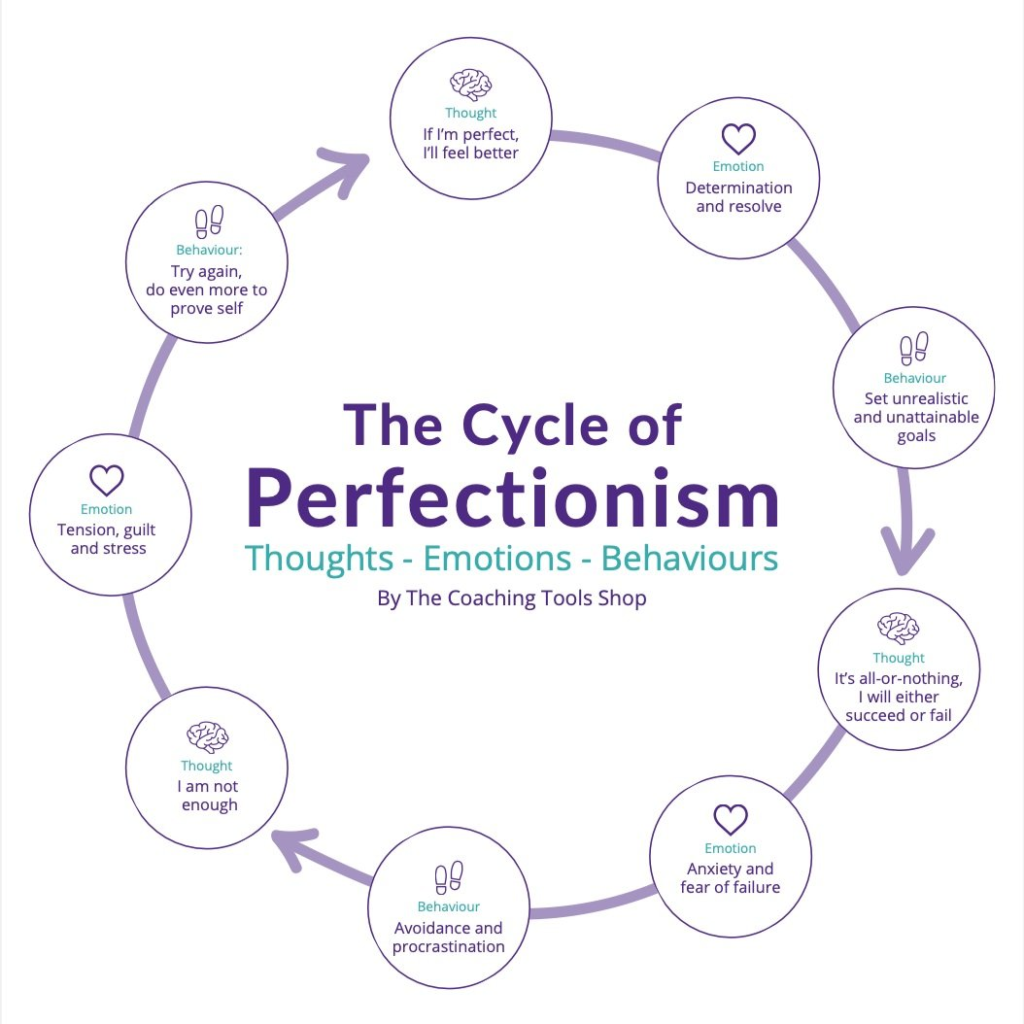
    The cycle of perfectionism, showing how unrealistic goals for onself leads to anxiety and fear of failure, avoidance, then failure, and committing to do even more.
    Found this with a quick image search, since blog posts with images every now and then do better apparently. source

    I didn’t even realize that this was perfectionism at all. It masqueraded itself as a genuine feeling that I didn’t know how to do this. But at the same time, I couldn’t bear to not be able to get it done.

    So… how did I get here?

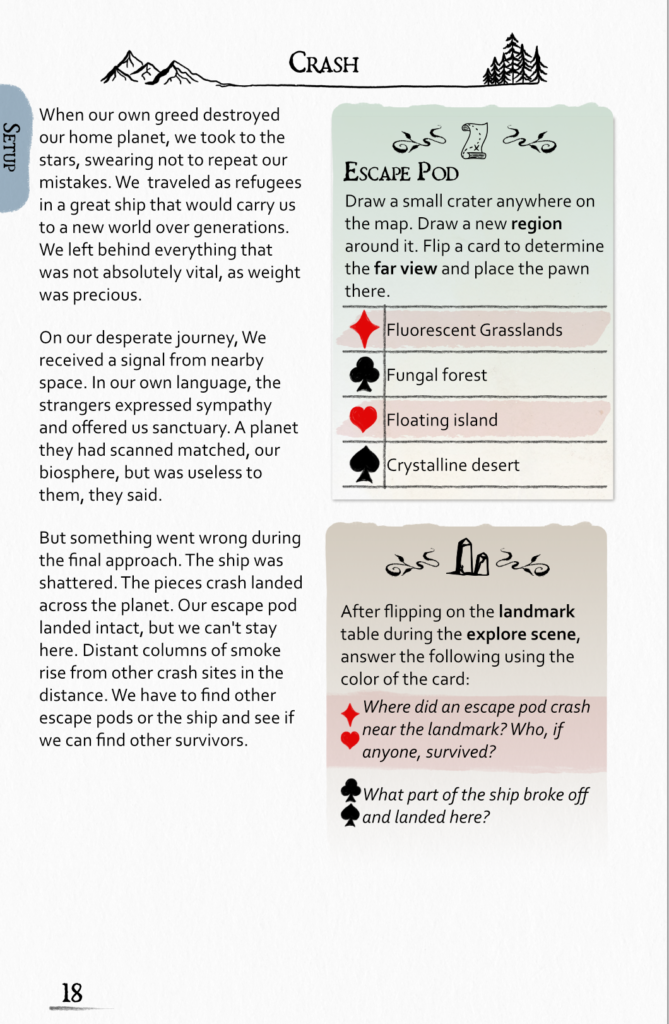
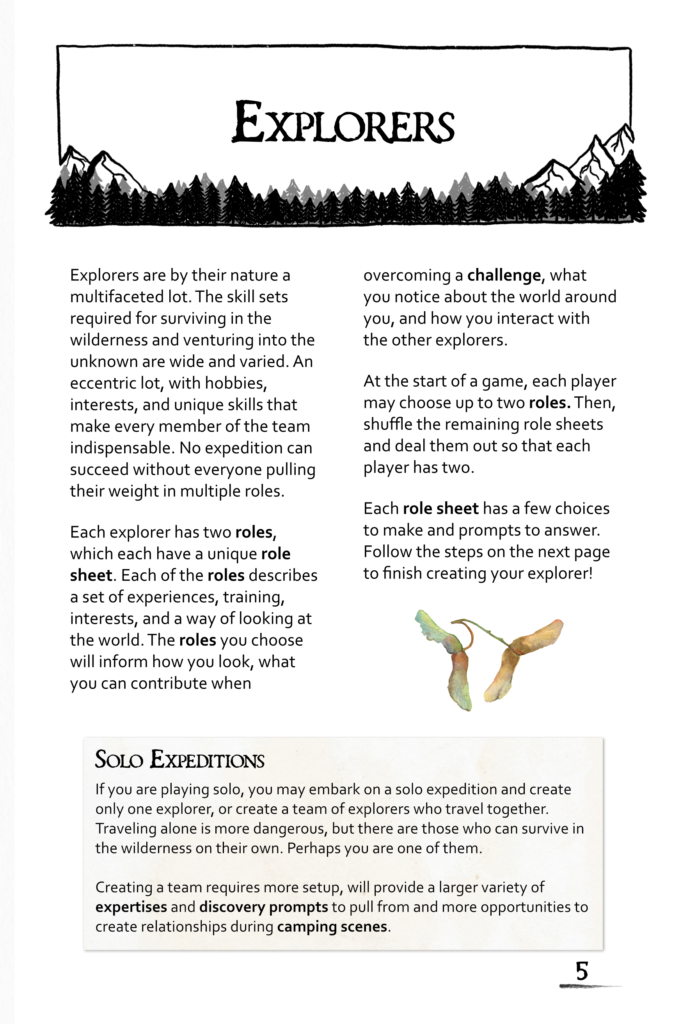
    A page titled "Explorers" with two columns of text describing the characters for Far Lands. It is decorated with art of maple seeds, and an insert box with rules for solo expeditions.
    The introduction page for the Explorers chapter of Far lands

    Step Zero

    Doing some research, it seemed like one of the ways to break the nasty cycle of perfectionism was to change how I set goals.

    For most of my life I held a great degree of skepticism for goal-setting. It seemed so easy to set a goal and so impossible to follow through. Goals seemed to just be a guaranteed source of shame and guilt looking back later. Everything I wanted to accomplish just seemed impossible. How would I even begin? What do I do when I get stuck?

    So I’d given up on setting goals and would just… wing it. And a lot of the time that worked! But over time this method required more and more external support and I just kept getting stuck and burned out not knowing what to do all the time.

    When I was approaching a big part of the project and didn’t know what to do, I would freeze- paralyzed because I didn’t know the next step. It turns out this comes from perfectionism. I felt like I couldn’t start until I know what I’m doing. Because I might mess it up. And thinking about this is when I unlocked the first part of the problem.

    My process didn’t account for step zero

    Step zero: Figure out what step one is

    This idea came from the concept of “Session Zero” in running an RPG campaign, and it’s exactly the same idea. Before starting to do any work, spend some time dedicated to figuring out what work needs to happen first. Set expectations, outline the bounds of the work, choose tools, and so on.

    This is now the first thing I do for every project. It feels obvious in hindsight, but before this some part of me always expected that I’d be able to sit down and intuitively know what needed to happen without planning because… sometimes I could do that, especially in the school system growing up when the steps are often much more clearly spelled out. But that was an unreasonable expectation for myself.

    But…

    I started using step zero. And it worked! At first, this made it easier to get started, but I still struggled to follow through. I would sit down, try to break off a piece, and then do that piece immediately. But it was so, so hard to see how that piece contributed to the final goal. The monolith still seemed infinite and impenetrable!

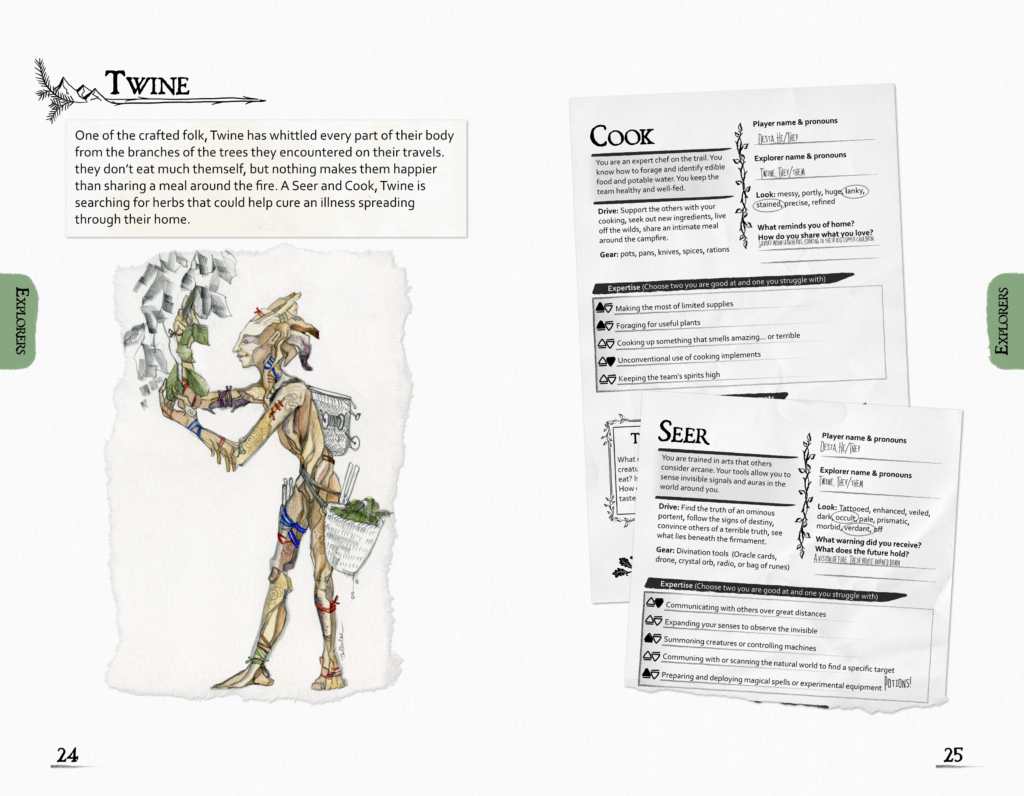
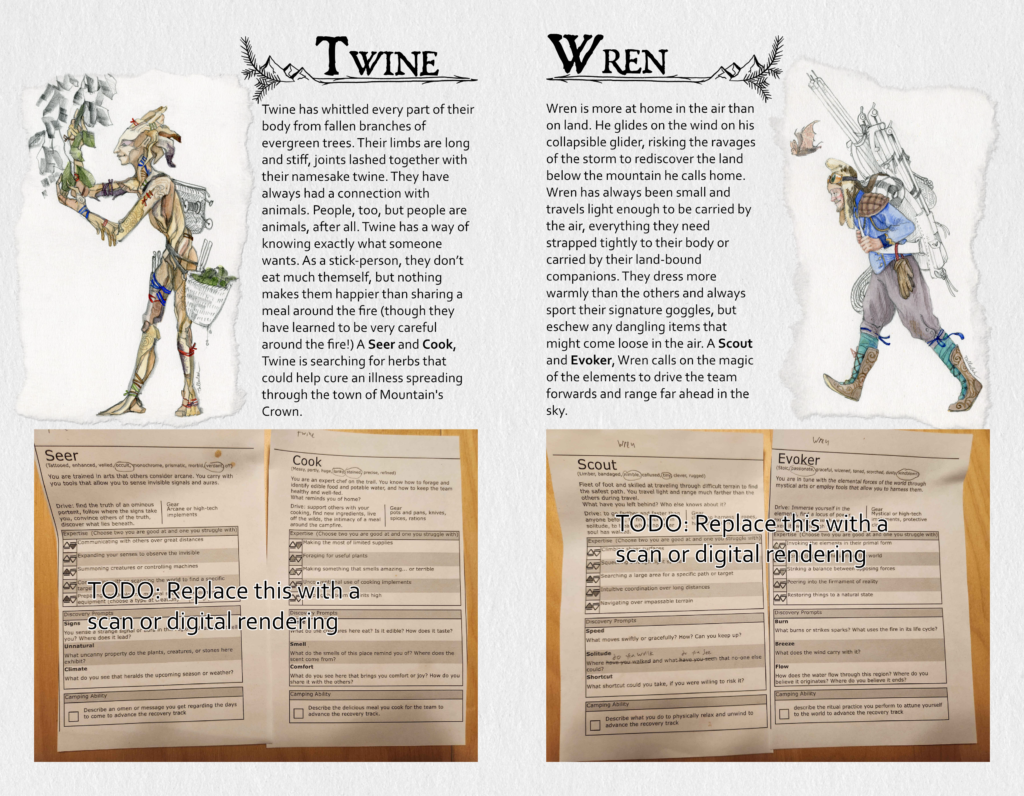
    A sample explorer, Twine, showing their playbooks, description, and art
    One of the first spreads I laid out because I expected it would be one of the hardest

    The monolith is made of bricks

    So how do you go beyond just the first step?

    My day job has been extolling the virtues of SMART goals for long enough that some of that sank in. I finally realized the problem: My goals were too big, and much too vague. I had no idea how to start doing layout for Far Lands, or any project of that size, because there’s no way to complete a big project in a single step. I need to break it down, and the pieces need to be small. Way smaller than I thought. And just one step at a time isn’t enough.

    This dovetails with something else I learned about myself recently. Some tasks are “derailing,” others aren’t. A derailing task comes with opportunities to veer off onto something that seems more urgent… which means the original task will rarely get finished. Tasks like checking email or making a to-do list ballooned out of proportion because they came with all the spin-off tasks they spawned. And breaking down a large project was no different. This is why I only ever got as far as breaking off the first piece before I started trying to work on the project!

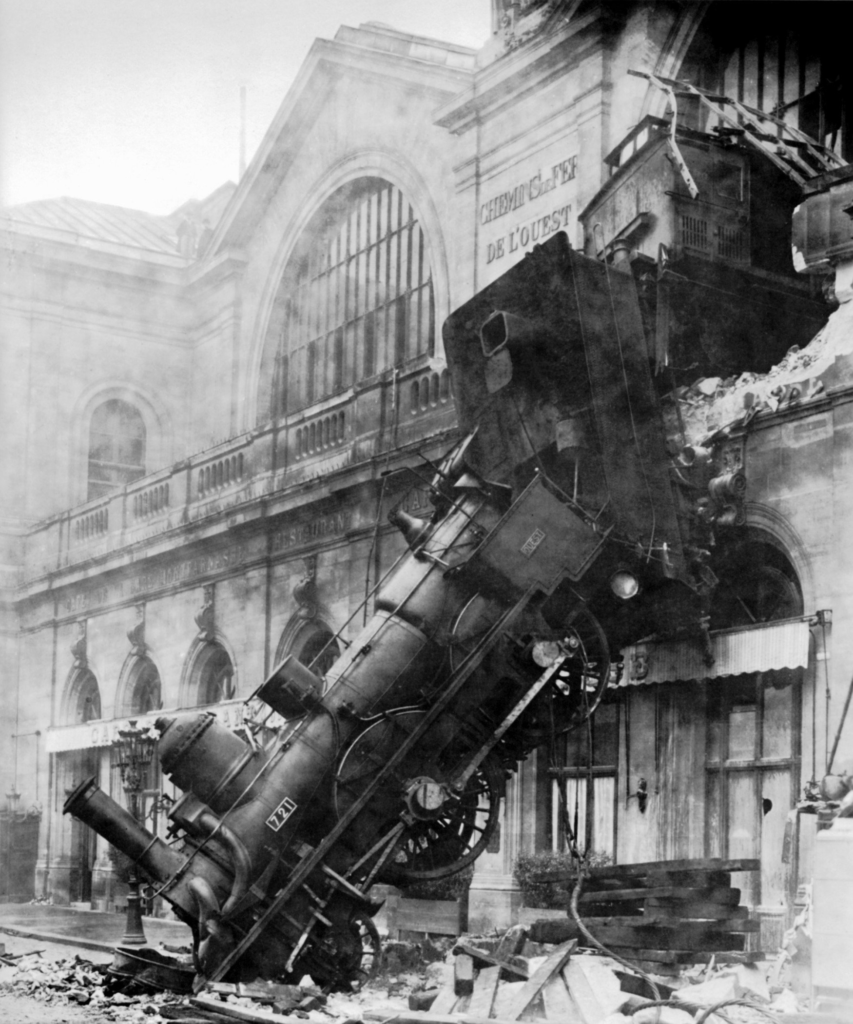
    A train bursting out of the back of a train station and falling down onto the street below
    Me when I get an email

    But if I go into a derailing task with the intention of just writing down all the little tasks, rather than jumping in to doing them right away, it suddenly becomes possible to complete the whole task.

    So this time, I tried something different. I broke down the whole thing in one sitting instead of one piece at a time.Without any intention to actually do any of those pieces immediately.

    Make a plan without trying to act on it immediately

    This totally changed how I’ve been approaching my projects. When I finish a task, I know exactly what needs to happen next. Of course the plan changes over time, but there’s plenty of room for that. It’s completely different from how I’ve worked in the past and it’s unbelievably refreshing.

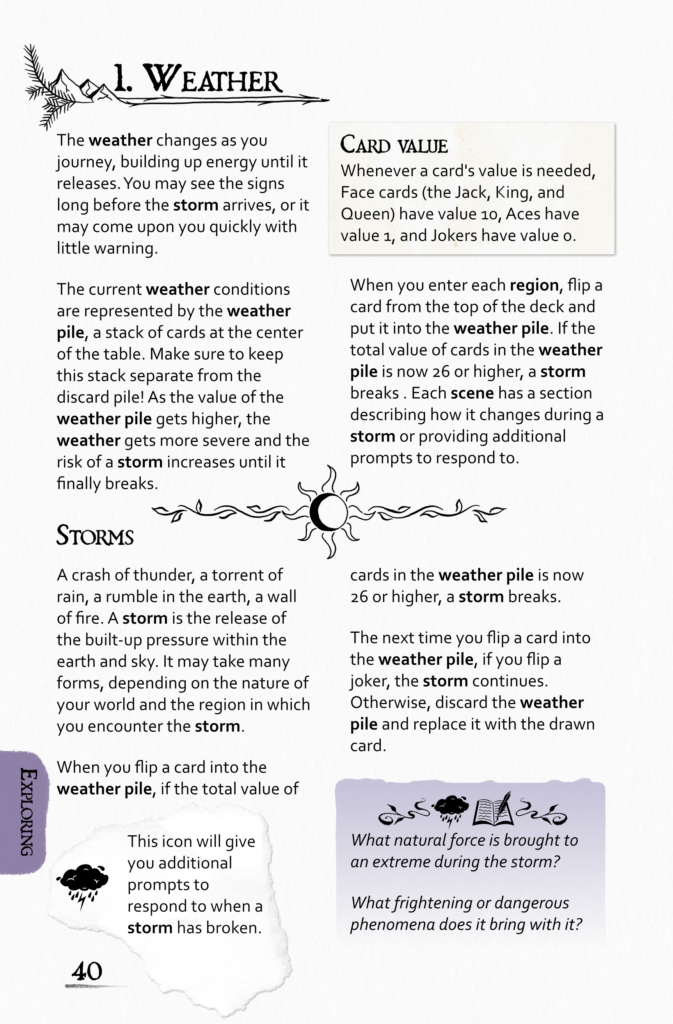
    The weather page for Far Lands, describing how the weather pile works and what storms do
    One of the most recent pages I laid out.

    But how can you completely plan out a project without knowing what unexpected hurdles you’ll run into? Well… you can’t. But there are no consequences (in this case) for false starts and experiments. In fact, it will actually help refine the final product by allowing you to explore the space of what’s possible and learn tools and skills. Starting out with some low-stakes exploration helps refine the plan as you go.

    Failure is actually part of learning. Who knew?

    It feels obvious, but I feel like it’s finally sunk in for me that it’s ok for the first draft to be rough. In fact, it’s better that the first draft is rough because it’s going to need polishing anyway!

    So I had my milestones, but how do I go about accomplishing them?

    The bricks are made out of atoms

    My secret so far has been to weaponize the same perfectionism that prevented me from getting started. Using an app for tracking habits, I made a daily task to “do a bit of layout.” My requirement is very, very small on purpose. Literally any small amount, even a single word, will let me check it off the list. But it bugs me if it’s left incomplete at the end of the day. I hate it.

    And that’s something I want to be careful of. I don’t want to slip into feeling guilt or shame if I can’t keep it up every day I never want to feel like I’m falling behind some imaginary standard I set for myself. But as a weapon against avoidance, it’s worked. There must be a balance to strike, but if there is I’m still in the early stages of finding it.

    Weaponize perfectionism against itself (carefully)

    Activation Energy

    There’s one more trick to this method. So often what stops me from doing something I want to do is just resistance to getting started. Gathering the activation energy required for task initiation. But committing to doing the minimum amount of work gets me to open the document. But often just opening the document is the biggest hurdle. Once that document is open, it’s easy to do just a bit of work.

    And that’s enough. The very minimum is enough to check it off the list, and with that win comes the motivation. Once I’ve done a bit of work and had that first win, it’s easy to keep going because I remember that it’s fun. Or, when it’s not fun, I remember that it’s progress towards a long-term goal, which is at least satisfying. But it’s that tiny atom of a goal that gets the whole thing going. It primes the pump and gets the metaphorical creative juices flowing.

    Prime the pump with an easy win

    So what’s next?

    It finally feels like this is something I can make real. And more than that, I feel capable of accomplishing that myself. And I’m way ahead of schedule! So where does that leave me?

    For one thing, I’m not going to adjust the timeline. I’m going to keep checking things off the list as I get them done. Leaving myself a lot of time to work means I can account for changes in circumstances later. For one thing, I’ll be doing some travel in a few months that will affect my schedule. For another… it feels really good to be so ahead!

    But the more practical consideration is that realistically speaking, none of the individual chapters of the book are actually done done. This method has helped me to leave the rough draft rough on the first pass. So once I finish putting everything on the page, that’s only the beginning.

    There’s a lot more to be done. And I can’t wait.

    Subscribe to Far Lands updates

    * indicates required

    Intuit Mailchimp

  • Engaging with the Mechanics part 1: Cognitive load

    Recently in a game I was running, I had an amazing combat planned. The players were confronting a villain from their past- a pyromancer who used to lead a gang the players had wiped out. I made some really fun stat blocks and mechanics for tracking the burning buildings as the fire spread. The combat went without a hitch. The players had fun, I had a great time running the enemy, but then at the end, one of the players looked at me and asked “so who was that?”

    In that moment, I realized I had completely forgotten to sprinkle in the lines of dialog I’d written that would remind the players of who she was. We rolled back and did some flashbacks to the banter that I had wanted to happen, and it worked out ok, but I was frustrated that I’d completely forgotten an important part of the encounter that could have made it so much more impactful.

    I can’t count how many times as a player I’ve looked at my sheet at the end of a session and realized I’d completely forgotten a spell or piece of gear that could have solved a problem two hours ago. It’s infuriating and disappointing and can dampen a moment that should be fun to know that it could have been better if only I’d remembered.

    As a game master, I think a lot about how to help my players have fun, and as a player, I get frustrated when I’m not having as much fun with a game or system as I could. There are a lot of things that can get in the way of that. As a designer, we try to build systems that will help everyone at the table find the fun and create the type of experience we want, but the systems only work as intended if the players (and the game master is also a player) actually engage with it.

    So, what can stop a player from engaging with part of a game? Well, the first step is just remembering that it exists.

    This is part 1 of a series where I’ll talk about what can prevent players from using the mechanics you build, with a focus on the various solutions to each problem as deployed in the games that inspire me.

    Cognitive load

    What is cognitive load?

    When designing or reading a game, it can be easy to hold all the systems in your head because you’re only dealing with the system at a mechanical level. However, at the table there’s a lot more going on- tracking social dynamics, spotlight management, narrative flow, role-playing, and maintaining the game state all add cognitive burdens that will cause things to slip. These all add to the cognitive load of the game.

    “Cognitive load” is a term that describes how much mental effort it takes to learn something or perform a task, including memory and problem-solving. Basically, everyone has a finite amount of things they can hold in their brain at a time, and so we have to prioritize. In tabletop games, every mechanic adds to the cognitive load of a game, and if a mechanic isn’t important, frequently used, and memorable, it’s going to slip off the plate.

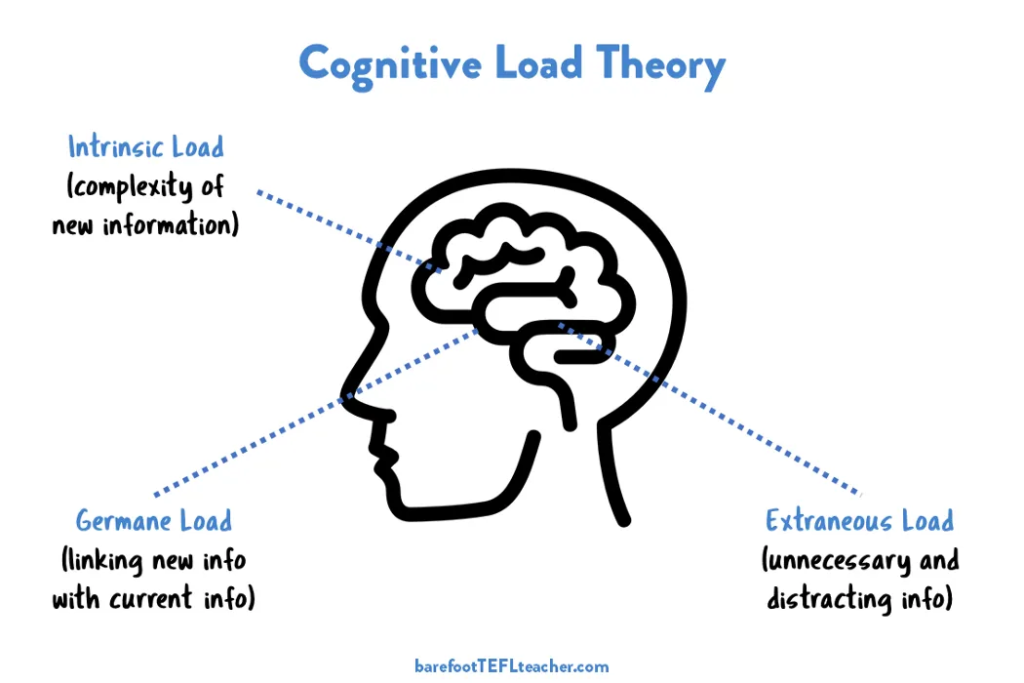
    Cognitive load is often broken down into three categories:

    Intrinsic load

    How difficult is it to understand the new information?

    Germane load

    How difficult is it to integrate the new information into our existing knowledge?

    Extraneous load

    How much junk is there getting in the way?

    Infographic showing the different types of cognitive load described above
    Graphic from www.barefootteflteacher.com

    Why does cognitive load matter?

    Cognitive load has been on my mind a lot recently. There are certain things I enjoy a lot as a game master, and things that I struggle with. I have a hard time inventing NPCs to fill the world, and no amount of random tables or prepared characters seem to help. But the history, politics, and geography of the world is as easy as breathing for me, even where I’ve left blank space to fill in later. Running complex mechanics in bespoke puzzle combats is thrilling and engaging, but I get so focused on them I forget to slot in the narrative beats I’d planned to make the story tick.

    It’s frustratingly easy for the parts of a game that are more challenging for me to take up the majority of my cognitive bandwidth at the table. They just take up more space. The things that are fun seem to happen automatically because they require less conscious effort, but they still demand mental resources.

    When all my bandwidth is dedicated to parts of the game that are heavier on my mental scales, the fun parts start to slip away from me. Conversely, when I’m too sucked into the fun parts of the game in the moment, I’ll forget to employ important mechanics that will keep it fun long-term. I want to be able to do everything! But with a finite amount of resources, the brain prioritizes, and it doesn’t always prioritize the way I prefer.

    As a game master and a designer, I want to get more of what I enjoy in a game by reducing the cognitive load of the parts I don’t.

    So how can we help people remember?

    Solution 1: Reference sheets.

    I can’t tell you how often in a game a player knows there’s a mechanic for something but can’t remember the specifics. In a lot of games, this either means digging through the book to find the official rule, or making a ruling on the spot (and I almost always recommend the latter). With a reference sheet, though, players can look down at what’s already on the table and see it’s right there.

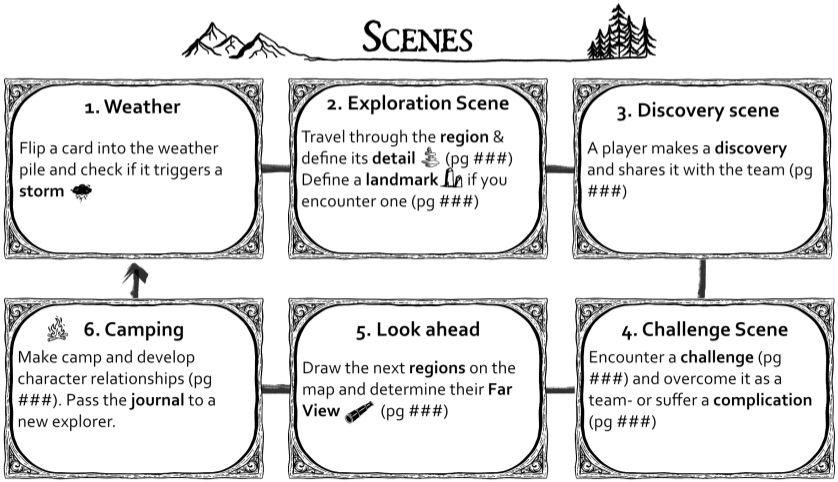
    A reference sheet for Scenes from Far Lands, including Weather, Exploration, Discovery, Challenge, Look ahead, and Camping, arranged in a circle.
    A prototype of the “Scenes” reference sheet from my game Far Lands

    Reference sheets are important for any game. They reduce the extraneous load of the game by presenting the information you need free of surrounding clutter. The simplified language of a reference sheet can also reduce the intrinsic load.

    But most importantly to me, It frees up space to remember other things. When a player knows they can look down at the sheet when they need that mechanic, they don’t have to keep it in their active memory at all times. This means players only have to remember the rule when it’s relevant and can get refreshers as-needed by checking the reference sheet.

    At a practical level here are varying degrees of how close-to-hand a mechanic can be: it could be on a shorter “quick play” document, a one or two page list of mechanics like you might see in a PBTA game, or even written on the character sheet in front of every player. Many games have even taken the approach of putting character mechanics on individual cards: Daggerheart, Ironsworn, and 4th edition Dungeons & Dragons all take this approach. The cards mean players can keep only the relevant parts of their character visible and hide irrelevant cards, reducing the extraneous load even further.

    The problem with reference sheets, however, is also one of cognitive load. There are diminishing returns to how useful a reference sheet is as you add more and more to it. Every item added to a reference sheet means it will take longer to search it for what you need and increases the visual clutter- adding to the extraneous load. Multiple pages of reference sheets means physical work flipping through them. So a reference sheet needs to be limited to just the systems that are used very frequently (so that players don’t have to keep it in their memory at all times), or the systems used infrequently but which are very important to the experience (to reduce lookups in the book).

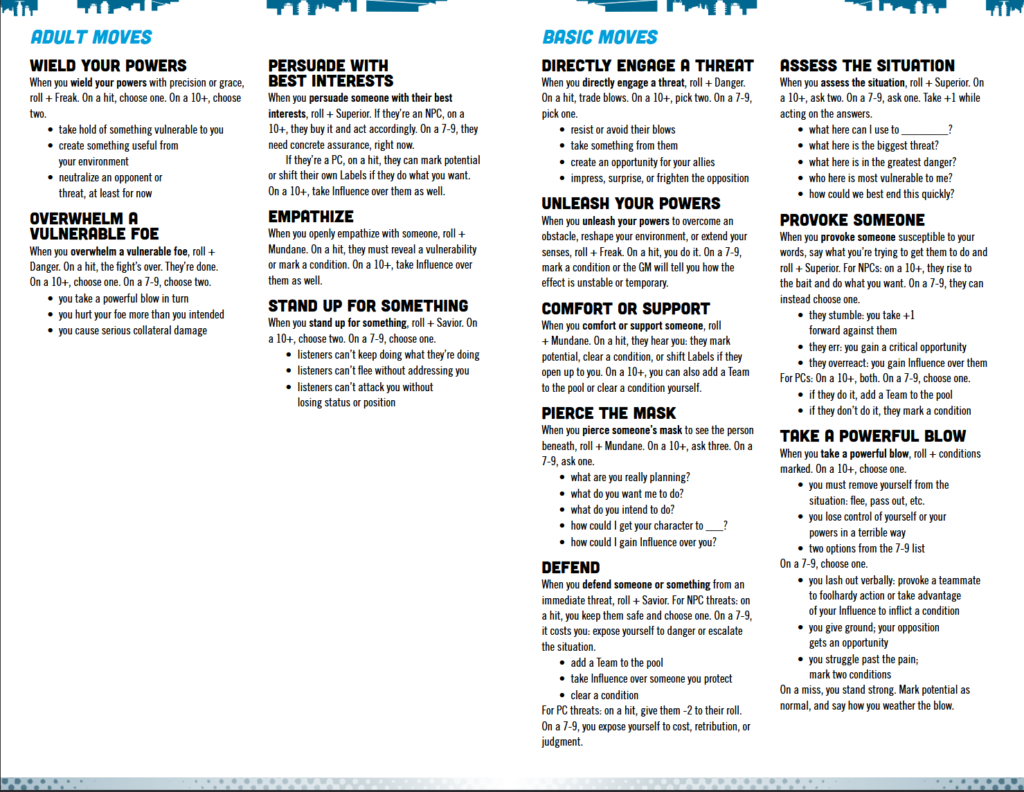
    For examples, look at just about any PBTA game, but let’s look at the reference sheet from Masks: A New Generation for a specific example:

    The moves reference sheet from Masks: A New Generation
    The moves reference sheet from Masks: A New Generation

    It presents only the most important moves, laid out in simple language with clear headings and emphasis on important text. The basic moves will be used constantly, and while veteran players may come to know them by heart, new players will have to re-read them every time because each move is quite complex and unique.

    The adult moves, by contrast, are going to be used very rarely- but are very important when they are! They have a significant impact on the narrative so forgetting to use them or how to use them would be deeply unfortunate. I personally take issue with putting the adult moves first on the reference sheet, since a brand new character will not have access to any of them, however having them on the reference sheet is very important for long-form play because players may have so little interaction with those moves they would not have a point of reference for them.

    Solution 2: Separation of responsibilities

    Another way to reduce cognitive load is to divide it up between players. The most common way this is done is splitting up responsibilities between players and the GM. Using a traditional fantasy RPG as an example, the players don’t need to know how enemy stat blocks work. The GM doesn’t need to remember how every spell the players use works. Each player doesn’t need to know how other players’ character’s mechanics work.

    But there’s a fatal flaw:

    If you read through the rules of many of these games, you will see nowhere that this separation is written in stone. It’s just a best practice that tables have adopted because it is necessary to run the game at a high level. the more inexperienced the players are, the more of that cognitive load shifts onto the GM to keep the game running, and that leaves the GM with less cognitive bandwidth for tasks like storytelling, role-playing, and spotlight management. It leads to GM burnout and takes away some of the most fun parts of being a game master.

    GM-ful games

    However, there are games that make this explicit. Belonging Outside Belonging is an awesome example, where responsibility for certain parts of the game are divided between players. Seven Part Pact takes this to the logical extreme, giving each player a full set of unique rules that they are in charge of. These games have been called “GM-ful,” as a contrast to “GM-less,” as they give every player some part of the traditional “game master” responsibilities.

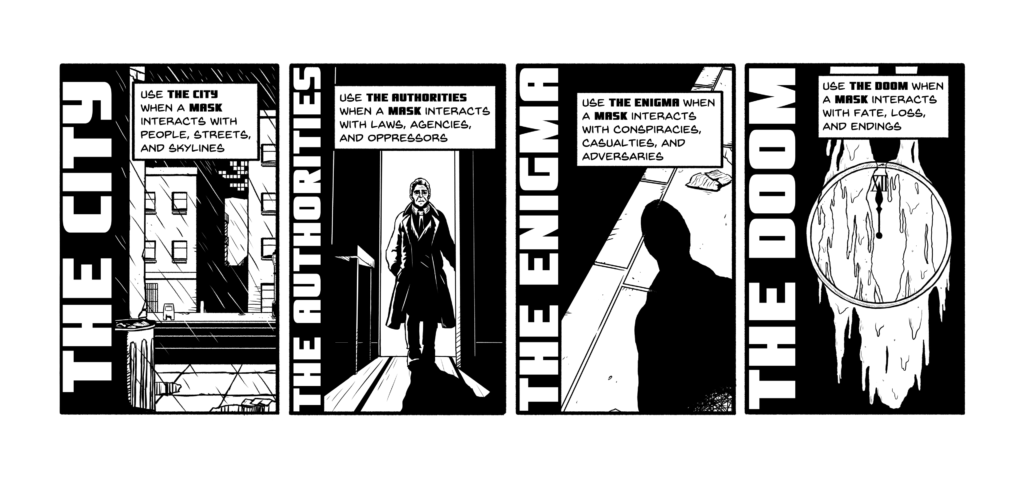
    For an example, check out Masks of the Masks, a much darker superhero game inspired by Watchmen. This brilliant game breaks down the responsibilities of the game master into “pillars” that each have responsibility for running a different part of the game:

    A graphic of the four pillars from Masks of the Masks: The Cirty, the Authorities, the Enigma, and the Doom.
    The four pillars of Masks of the Masks

    I love superhero games, but I have always struggled to run them. I have tried to run Masks: a New Generation many times, but I inevitably have burned myself out trying to manage everything I want to do in the game. It’s a goal of mine to figure out a system that lets me run Masks: A New Generation at the level I want without pushing myself too hard. But Masks of the Masks takes a GMful approach. One player runs the day-to-day people of the city. One person runs the government and the law. One person runs the mystery. And one person runs the inevitably-approaching Doom. Each player is game master for the other players, but nobody has to take on the role alone.

    Even in a GM’d game, responsibilities can be delegated to players from an overwhelmed GM. Too busy setting up stat blocks to draw interesting terrain? Ask the players to draw the map! Forgetting to track health totals? Give each player some enemies to track health for. In fact, giving players authorship of some parts of the game and the world can help develop buy-in and engagement (I’ll talk about this more in a later post!) and give players something to do in games with strict spotlight management when it’s not their turn (I will also talk about spotlight management in a later post!)

    Solution 3: Simplify

    This is the hardest but most important as a designer. If players hare having a hard time remembering a mechanic, maybe you have too many. Maybe the systems are too unique and should be combined. If you see players in playtests struggling to remember a mechanic or forgetting to use it, consider if you need it at all.

    This is really the core of the problem. The only guaranteed way to reduce cognitive load is to reduce the amount of information. Rules that are too complex increase intrinsic load. Rules that are too unique increase germane load. Rules that are optional or unnecessary increase extraneous load.

    Reducing intrinsic load

    Make your rules less complex! After your early drafts of the game, make a box that you have to fit your rule into. Then make the box smaller and re-write the rule in that box (without changing the text formatting). Then do it again. This forces you to strip out the least necessary parts of the rule- the exceptions, the qualifiers, the redundancy. Compress it into its most compact form. I promise, the rule will still work.

    Reducing germane load

    This one requires reading.

    One thing you need to make sure your game has is consistency. Create a language for your game and stick to it. Go read other games and pay close attention to the language people use when writing game rules. What games have the most memorable rules? How do they template things?

    Magic: the Gathering is an amazing example of this- it uses a lot of phrases like “at the beginning of each upkeep” or “whenever a player draws a card” that are very well standardized (at least, in modern cards). This sort of language has been refined over decades to make it as easy as possible for players to fit a new card into a system they already understand. Compare to Yu-Gi-Oh, where each card uses much more natural language. There may be less work to learn the basic rules (lower intrinsic complexity), but each unique card is much more difficult to understand because they’re so unique (high germane complexity).

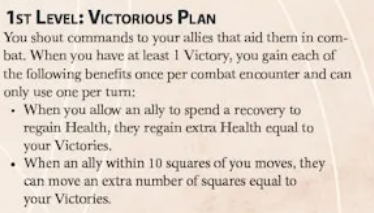
    Draw Steel is another phenomenal example for this. The game is extremely complex, with a lot of terms to learn like in Magic: the Gathering, but once you learn the language, everything is so well standardized, it becomes very easy to read a new ability and understand what it means, and the language they use is designed to be similar to other games which it follows in the footsteps of.

    An example of an ability from Draw Steel
    An example of an ability from Draw Steel

    But also: steal. Find other games in the genre of game you’re trying to make and see what they do. Chances are, other people have tried to solve the same problems you have, and come to different solutions. This isn’t to say you should steal ideas from other games (though you absolutely should), but rather that the more similar your game is to other games people have played before, the easier it will be to remember the parts that are different. If there’s part of the game that isn’t important to the theme but is required to make it function, you should see if you can get away with cutting it altogether, but if you can’t, make it similar to what people who have played other games will be familiar with.

    If the puzzle-piece edges of your game match up what’s already in the players’ brain, it will fit in without a problem.

    Reducing extraneous load

    Extraneous load comes in two forms: visual clutter, and mechanical clutter. The first is a design problem that you can approach in a similar way to reducing intrinsic load: Just fit the game into a smaller space. But you can also help by formatting the rules cleanly.

    Reducing mechanical clutter is another beast entirely. As a designer, it can be really hard to kill your darlings. We can develop blind spots for things that have been in the game from the beginning but don’t serve it anymore. Remember that none of those ideas are gone forever. Start an ideas document you where you catalog the mechanics that don’t make the cut. Those things may have been necessary scaffolding to get the game to where it is now, but are no longer holding anything up, and you can pack them up to deploy them elsewhere.

    To reduce your mechanical clutter, perform an “ablation test.” Pick one mechanic and see what happens to the game if you remove it completely. Repeat this for every mechanic, even the ones you think are critical. If you have to, replace them with the most bare-bones patch you can think of that will let the rest of the game function. Sometimes you’ll be surprised how well the game still works without something you thought was critical.

    The bottom line

    Every system is going to have a very different shape, and every person has a different shape of brain for all the pieces to fit into. Where some systems might heavily mechanize combat, some might have mechanics for social interactions, for exploration, for puzzle-solving, for crafting narrative arcs. The parts that come naturally to one person will be very different from another. Where one player might struggle to remember tactical options in combat, another player might struggle to remember how to engage an NPC in witty banter.

    This comes down to the match between the kinds of fun a player prefers vs what the game provides, and the relative strengths and weaknesses of different players (I will definitely write more about this in the future). At a psychological level, it has to do with the points of reference a player has. The more a person has encountered similar things in the past, the more work they’ve already done to make space for that type of thing in their brain, because it can be put together with things they already remember (“XYZ is like YZ, but with the addition of X”). This is at the heart of germane load.

    As designers, we know our games by heart, so it can be hard to see what other folks will struggle with. We build the games we want to play, the games that fit well into our own uniquely-shaped memory. So don’t build just for yourself, but for the player who wants to engage with your system but just can’t remember the parts that you know by heart.

    Now I just need to remember to apply all this advice myself.

    For more on cognitive load, check out this awesome video by Chubby Funster on youtube.

    What’s next?

    While it might seem like a simpler “rules-lite” game might have less cognitive load, for some players, those games are considerably more difficult because of the difficulty of knowing what to do next. The lack of direction, the blank page, can leave players less experienced with improvising feeling paralyzed. I’ll talk about this in my next post where I’ll go over the difference between and importance of “white space” and “green space” in game design.

  • Far Lands Layout: Timeline, sample pages, & Lessons Learned

    As we’re going into the new year, I’ve been thinking about resolutions. After a while of putting it off to work on other parts, over the last month, I’ve built up a good amount of momentum on layout for Far Lands!

    I was nervous about doing layout myself- it’s a part of the process I’ve never done before, but after getting some practice with Affinity via the TTRPG Bookmark Jam and getting accepted to run the game at a local convention in my area, I decided to make it my resolution for next year to get the book laid out. I have a clear idea of visual style and I’ve gathered most of the assets and art I need. Now I just need to do the work!

    To make the plan loose enough to adjust to unexpected life changes, I broke the book down into sections and distributed them by month. You can see I’m already ahead, which is great, though I don’t expect to stay that way. I gave more time than I thought I’d need to a lot of sections but I expect some sections will take a lot more time than others. By keeping myself accountable to get just a rough draft done each month, I hope to keep up the momentum I’m feeling right now without burning myself out.

    Timeline

    December 2025
    Role sheets (Done!)
    Sample explorers (Done!)

    January 2026
    Party sheet (Done!)
    Order of Play handout (In progress)
    Quick reference tables

    February
    Character creation

    March
    The Team
    Getting Started

    April
    Exploring the world: Intro
    Weather
    Prologue scene

    May
    Exploration Scene
    Near table

    June
    Discovery scene
    Start challenge scene

    July
    Finish challenge scene
    Look Ahead
    Far table

    August
    Camping Scene
    Memories and Connections table
    Epilogue scene

    September
    Scenario template
    Advanced setup

    October
    All scenarios

    November
    Journal entries
    – Captain’s Log
    – Fort Serendipity
    – The Forge
    – Spider-goats

    December
    Intro
    Sample of play
    Appendix

    Sample pages

    Check out what I’ve got so far for my sample explorers pages! This is pretty rough- I’m planning to rewrite the descriptions to fit the space better and I need to substitute in the new and improved role sheets. Featuring art by the amazing Tallulah Cunningham!

    A spread of two sample explorers, Twine and Wren, featuring art. Twine is a stick-person, made of lashed together wood. Wren is a smaller man in warm clothes carrying a collapsible glider on his back with a bat companion flying over his head.

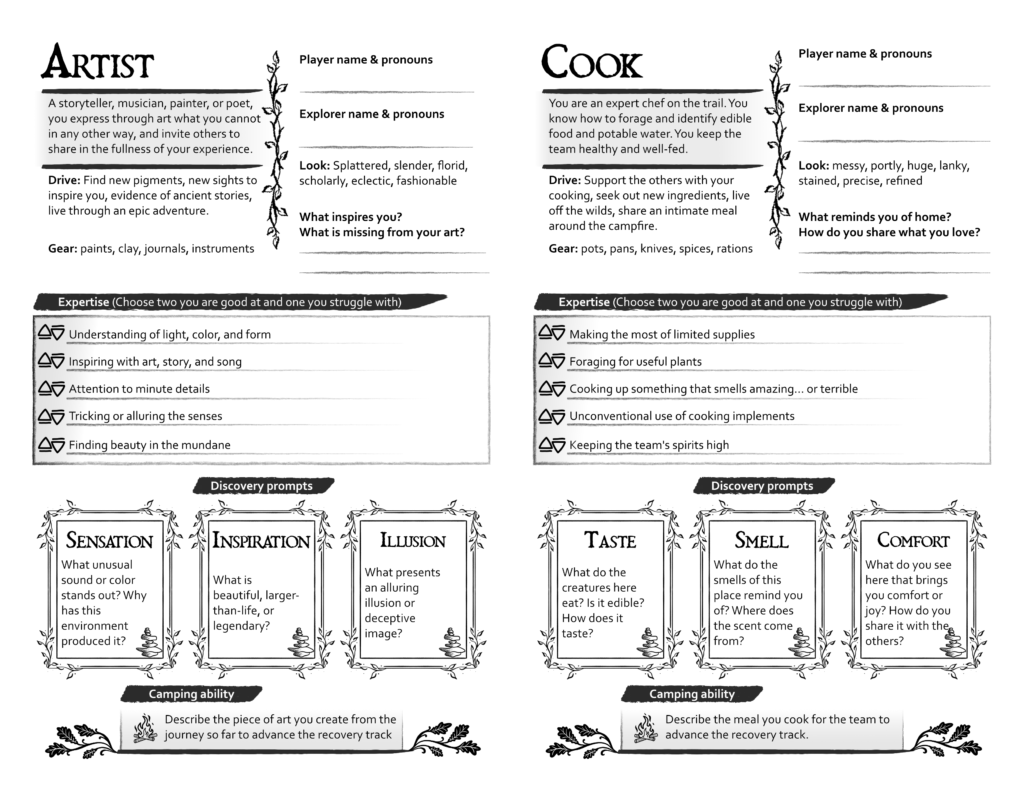
    Speaking of the new-and-improved role sheets, here are a few samples of what those look like now, featuring a few assets by Alderdoodle! I still need to do a playtest with these to see how they feel in play (I almost certainly need more space to answer the character prompts) but they already feel so much nicer than the old ashcan version.

    A spread of two role sheets for the Artist and the Cook, featuring their expertise and the types of discoveries they can make

    I’ll try to keep posting updates as I go- at least monthly as I check off various sections

    What I’ve learned

    Affinity is awesome

    It turns out Affinity is a fantastic tool for what I want to do. The “Master Pages” feature makes it so easy to create a template for a certain type of page (such as a character sheet) and apply changes to all of them at once! But I’ve also learned that tables in Affinity are… wonky. In some cases it may be easier to just line up the boxes manually, and the vertical / horizontal align tools are so, so useful now that I’ve actually found where those live.

    Lower the stakes at the start to build momentum

    But most importantly, I’ve learned a big lesson about perfectionism. I was genuinely afraid to get started on this part of the project because I worried I wasn’t going to be able to make it look as good as I imagined, but also afraid to let go of control of it and spend the money to hire someone to do it. I’ve seen time and time again the mantra “First make it exist, make it good later,” and that’s a lot easier to say than to internalize. But what really helped me was to lower the stakes.

    Instead of jumping right into the deep end learning the basics of the tools with Far Lands, I joined a game jam I knew I could knock something out for relatively quickly. Something with a deadline, that I didn’t have the same huge level of emotional attachment to. That way, I could feel safe to make mistakes without feeling the emotional burden of failing to live up to my high expectations for myself. And by doing that, I and discovered it wasn’t that hard to create something that looks how I imagine. And making mistakes on the first pass turns out to not really have consequences because I can keep revising it later. All this and reminding myself of the excitement I get from taking an idea and making it real has made it so, so much easier to take the next step. And I’m so excited to see what’s next.